
In the Age of Deepfakes, How Can Creators Prove Their Content Is Real?
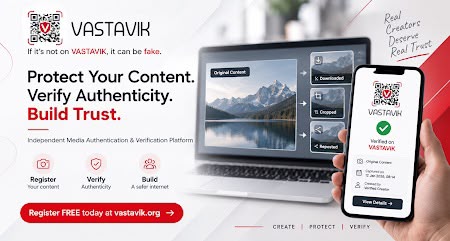
Imagine having a video viewed by thousands of people, and then within days, someone else has created a false version of your video with either your image or voice used. Within hours, people start to wonder if either of those two videos are actually genuine. This is no longer an uncommon issue for content creators. AI-created images, replicated voices, and fake videos are making it difficult to maintain trust in digital environments.
The issue isn’t simply identifying fake material; the difficulty lies in demonstrating that your original work is legitimate.
Why Creators Need More Than a Watermark
Watermarks and verification badges for social media are limited. Watermarks may be removed from photos/videos by cropping. Verification does not mean all images/videos uploaded to social media are true.
Creators require an accurate method to demonstrate the source of their content. The evidence used to establish this must be simple for viewers to verify.
Vastavik solution is the media authenticity registry. This registry allows creators to verify the authenticity of their photos, videos, and audio prior to being published.
Turning Original Content into Verifiable Proof
The process will provide each registered file with proof of being recorded on the blockchain. Furthermore, each of the file creators will receive either a personalized QR code or Vastavik ID.
Viewers may scan the code or type in the ID to find out about the registration status of the content. Scanning the code or entering the ID will allow viewers to easily verify the claims made about the content.
The platform also offers tools that support digital identity protection:
- AI deepfake detection: Helps identify potentially manipulated media.
- Voice ID protection: Protects voices that are being used by podcasters, musicians, and public figures.
- Content validation: Gives creators proof that their media was registered.
- Easy validation: Enables viewers to verify the accuracy of the content via either a QR code or an individual identification number.
Who Needs Digital Content Protection?
Anyone who depends on public trust can benefit from media verification.
Journalists need to verify the authenticity of their recorded footage. Musicians and podcasters must safeguard their voices. Educators and public speakers must ensure confidence in the integrity of their recorded materials. Additionally, businesses must protect official videos and company-branded content from unauthorized usage.
When there are fake versions of your original media available on the internet, you can create a clear record of your original media so that you will be able to prove that it was yours.
Make Authenticity Part of Your Publishing Process
While deepfakes will likely improve in terms of realism over time, those who create these types of videos can still protect their work. Creating verification procedures for each video prior to publication provides viewers with a much easier method to verify the authenticity of what they are viewing and listening to.
With Vastavik, creators have a way to include authenticity in their digital identity. This is the first step in ensuring that your original work is protected. You will be able to register your content, and allow your audience to confirm its authenticity.
To register for free, please visit https://creator.vastavik.org/register.
To explore more, please visit: http://vastavik.org/.